Study in Germany — University Degree

Step by step. Everything from APS to your first day in Germany — organized in the order you'll actually need it.

Not planning a Master's? → Explore Ausbildung instead
Study in
Germany
University
Visa
Blocked Account
Accommodation
Jobs
German Language
Insurance
Checklists
Popular fields

Popular fields of study

Germany has 400+ universities and thousands of programs. These are the fields Indian students pursue most often. Figures are typical ranges at public universities and vary by state and institution.

⚙️
Mechanical Engineering
Semester fee€150–350
DurationB: 3–3.5y · M: 2y
Taught inGerman (B2)
💻
Computer Science & Data Science
Semester fee€150–350
DurationB: 3y · M: 2y
Taught inGerman or English
🔌
Electrical & Electronics Engineering
Semester fee€150–350
DurationB: 3.5y · M: 2y
Taught inGerman (B2)
📊
Business & Management (MBA)
Semester fee€150–350 public
DurationM: 1–2y
Taught inOften English
🌱
Renewable Energy & Environmental Engineering
Semester fee€150–350
DurationM: 2y
Taught inGrowing English options
🧬
Life Sciences & Biotechnology
Semester fee€150–350
DurationB: 3y · M: 2y
Taught inGerman (B2)
🚗
Automotive Engineering
Semester fee€150–350
DurationB: 3.5y · M: 2y
Taught inGerman (B2)
🏛️
Architecture & Urban Planning
Semester fee€150–350
DurationB: 3.5y · M: 2y
Taught inGerman (B2–C1)
Fit check

Is university right for you?

Neither path is "better" — they're for different people. Be honest with yourself about which one actually fits.

✅ Suitable if you...
  • Want a globally recognised academic degree
  • Are aiming for research, specialist, or technical roles
  • Want tuition-free (or low-cost) education at a public university
  • Prefer structured academic learning over on-the-job training
  • Are considering a field that specifically requires a degree
❌ Not suitable if you...
  • Want to start earning a salary immediately
  • Don't want to spend 2–5 years before working full-time
  • Prefer hands-on, practical training over lectures
  • Don't meet direct-entry requirements and don't want to do a foundation year
University or Ausbildung? Not sure? → Explore Ausbildung
Getting ready

What you need

Eligibility, language level, and paperwork — everything to check off before you apply.

🎓
Academic qualificationBachelor's: 12th grade alone is usually not enough for direct entry — most Indian students need a foundation year (Studienkolleg) unless they've completed 1 year of a recognised Indian university, or scored highly in JEE Advanced/NEET, or did IB/A-levels. Master's: a completed, relevant Bachelor's degree.
📋
APS CertificateRequired for most Indian applicants to verify academic credentials. A new 70% Class XII threshold applies to the direct-entry Bachelor's track, effective March 15, 2026.
💰
Financial proofA blocked account with €11,904/year (2026 figure, ≈€992/month) is mandatory before your visa appointment.
🎂
AgeNo official upper age limit for university admission.
🏥
Health insuranceMandatory from day one — public student insurance runs roughly €120–130/month for students under 30.
🗣️
German-taught programmesB1 is the realistic minimum, B2 is recommended, and some subjects (or Studienkolleg tracks) expect C1. Proven via TestDaF, DSH, or Goethe certificates.
🇬🇧
English-taught programmesIELTS 6.0–6.5 or TOEFL 80–90+ is typical. A growing number of Master's programmes, especially in STEM and Business, are fully English-taught.
🏫
StudienkollegEven if your target degree is English-taught, Studienkolleg foundation courses are often partly taught in German, so B1 German is usually still expected.

Start gathering these early — translations, attestations, and APS take time.

📄 Academic Transcripts
📋 APS Certificate
🛂 Passport
✍️ Statement of Purpose
📝 Letters of Recommendation
📜 Language Certificate
📄 CV / Resume
💰 Blocked Account Proof
Step-by-step

Your Germany journey — in order

Most people get confused because they don't know what comes first. Bachelor's and Master's differ in a couple of key steps — pick yours below.

1
Step 1 · Language
Reach German B1–B2 (or check if you need it)

Most German-taught programmes require B1 or B2 German. English-taught programmes need IELTS/TOEFL instead. Know your target first — then learn accordingly.

2
Step 2 · Direct Entry or Studienkolleg?
Check your anabin classification before anything else

Indian Class 12 alone is usually classified as needing a Studienkolleg foundation year (1 year + a qualifying exam, the Feststellungsprüfung) before direct Bachelor's entry — unless you've completed 1 year of a recognised Indian bachelor's, scored highly in JEE Advanced/NEET, or did IB/A-levels. Check this before you shortlist universities, not after.

3
Step 3 · APS Certificate
Get your APS certificate — this takes time

APS (Akademische Prüfstelle) verifies Indian academic credentials for German university applications. The process takes 6–10 weeks — start this early. A new 70% Class XII threshold applies to the direct-entry Bachelor's track, effective March 15, 2026.

4
Step 4 · University Selection & Application
Choose universities that match your profile

Germany has 400+ universities. Match your CGPA, German level, and field to the right ones — not just apply everywhere. Most go through Uni-Assist; Winter semester deadlines fall around July 15 (some universities earlier), Summer semester around mid-January.

5
Step 5 · SOP & Application
Write your Statement of Purpose

Your SOP is the most important document in your application — why Germany, why this university, why this programme, and what makes you a serious candidate. A weak SOP loses admission even with a great CGPA.

6
Step 6 · Blocked Account
Open your blocked account (€11,904 required)

Germany requires proof you can support yourself — a blocked account with at least €11,904 (2026 figure) is mandatory for your student visa. Expatrio and Fintiba are the most common providers. This must happen before your visa appointment.

7
Step 7 · Student Visa
Apply for your German student visa

Book your appointment at the German consulate in India (Delhi, Mumbai, Chennai, Kolkata, Bengaluru). Required: admission letter, APS certificate, blocked account proof, health insurance, financial statement, language certificate, passport photos. Wait time can be 8–12 weeks.

8
Step 8 · Before You Fly
Health insurance, accommodation & packing

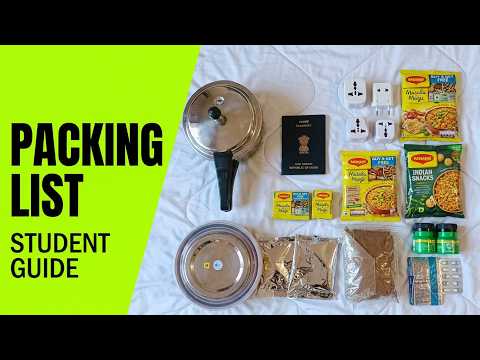
You need health insurance before you arrive — TK (Techniker Krankenkasse) and AOK are popular public options. Book student accommodation early — German university housing has waiting lists. Bring enough cash/forex for the first month.
✈️
Step 9
Land in Germany 🎉

Register your address (Anmeldung) within 14 days of arrival — mandatory. Open a German bank account (Deutsche Bank, N26, or Sparkasse are common). Get your student ID and enrol at university. You made it.

Ready to fly? Here's exactly what to expect, from boarding to immigration:

🎯
After graduation
Your 18-month job-search window

After graduating, you get an 18-month residence permit (§20 AufenthG) to find a job matching your qualification. Once employed, you move to a work visa or EU Blue Card (from €45,934 gross/year in 2026 for recent graduates and shortage occupations; €50,700 otherwise — these thresholds are re-set every January). After around 2 years of qualified work, permanent residency is realistic — much faster than the standard 5-year route. Make it in Germany — EU Blue Card ↗

1
Step 1 · Language
Reach German B1–B2 (or check if you need it)

Most German-taught Master's require B1 or B2 German. Many Master's — especially in STEM and Business — are fully English-taught and need IELTS/TOEFL instead.

2
Step 2 · APS Certificate
Get your APS certificate — this takes time

APS verifies your completed Bachelor's degree and transcripts for German university applications. The process takes 6–10 weeks — start this early, well before your target intake's deadline.

3
Step 3 · University Selection & Application
Choose programmes that match your Bachelor's field

Master's admission is evaluated on your completed Bachelor's — subject match and CGPA matter most. Winter semester deadlines fall around July 15 (some earlier), Summer semester (many Master's-only intakes) around mid-January.

4
Step 4 · SOP & Application
Write your Statement of Purpose

For a Master's, your SOP needs to connect your Bachelor's, any work experience, and your specific research or career interest to this exact programme. Generic SOPs are the easiest way to get rejected.

5
Step 5 · Blocked Account
Open your blocked account (€11,904 required)

Same requirement as Bachelor's — a blocked account with at least €11,904 (2026 figure) is mandatory for your student visa, opened via Expatrio or Fintiba before your visa appointment.

6
Step 6 · Student Visa
Apply for your German student visa

Book your appointment at the German consulate in India. Required: admission letter, APS certificate, blocked account proof, health insurance, financial statement, language certificate, passport photos. Wait time can be 8–12 weeks.

7
Step 7 · Before You Fly
Health insurance, accommodation & packing

Sort health insurance before you arrive — TK and AOK are popular public options. Book accommodation early, and bring enough cash/forex for the first month.

✈️
Step 8
Land in Germany 🎉

Register your address (Anmeldung) within 14 days — mandatory. Open a German bank account and enrol at university. You made it.

Ready to fly? Here's exactly what to expect, from boarding to immigration:

🎯
After graduation
Your 18-month job-search window

After graduating, you get an 18-month residence permit (§20 AufenthG) to find qualified work. From there, a work visa or EU Blue Card (from €45,934 gross/year in 2026 for recent graduates and shortage occupations; €50,700 otherwise — re-set every January), and PR realistically within ~2 years of qualified employment. Make it in Germany — EU Blue Card ↗

Money

Tuition & cost of living

Public university tuition is free in 15 of 16 German states — Baden-Württemberg is the exception, charging non-EU students roughly €1,500/semester. Everywhere else, this is what to budget for.

Semester fee
€150–350
Per semester, public universities — covers admin & often a transport ticket
Blocked account
€11,904 /yr
≈€992/month, mandatory for your visa
Monthly living costs
€900–1,200
Rent, food, insurance, transport, phone

International students can work part-time to offset costs — up to 140 full days or 280 half-days per year (roughly 20 hrs/week during term, full-time during breaks), at the 2026 minimum wage of €13.90/hour. Public health insurance for students under 30 runs about €120–130/month. DAAD and other scholarships (often ≈€992/month) are worth checking early, particularly for Winter-semester-start programmes — they can meaningfully offset the blocked-account burden if you qualify.

Once you're ready

The application playbook

How applications actually work, when things are due, and what trips people up.

🏛️ Uni-Assist vs. applying directly+

Many German universities use uni-assist.de, a centralised service that pre-checks international applications on behalf of its member universities — you submit documents once through their portal. Others, including several TU9 technical universities, accept applications directly through their own portal instead. Check each university's admission page before assuming which route applies — using the wrong one costs you weeks.

🗓️ Application deadlines by intake+
🍂
Winter Semester

Starts October. Uni-Assist deadline ≈ July 15 — some universities (TUM, Heidelberg) close as early as May.

🌷
Summer Semester

Starts April, mostly Master's intakes. Deadline ≈ mid-January.

Submit weeks before the deadline, not on it — document verification takes time, and late or incomplete submissions are rejected outright.

⚠️ Common mistakes to avoid+
🎓
Assuming 12th grade is enoughMost Indian 12th-grade-only applicants need Studienkolleg for direct Bachelor's entry. Check your anabin classification before shortlisting universities, not after.
📋
Starting APS too lateAPS takes 6–10 weeks. Starting it a month before your deadline is one of the most common, most avoidable mistakes.
✍️
Generic SOPA copy-pasted SOP is obvious to admissions committees who read hundreds. Be specific about this university, this programme.
🎯
Applying to too few, or mismatched, universitiesMatch your CGPA and profile realistically — applying only to the most competitive universities is a common way to end up with zero offers.
Submitting on the deadlineUni-Assist and university portals can take days to process a submission. Submitting on the exact deadline day risks missing it entirely.
💰
Not budgeting the blocked-account timelineOpening and funding a blocked account takes time to arrange. Leaving it until right before your visa appointment causes unnecessary delays.
Common questions

Study in Germany FAQ

Can I get direct Bachelor's admission after 12th grade?+
Usually not on 12th grade alone — most Indian applicants need a Studienkolleg foundation year plus a qualifying exam first. Exceptions: 1 year of a recognised Indian bachelor's already completed, a strong JEE Advanced/NEET rank, or an IB/A-level curriculum.
Is a German university degree really tuition-free?+
Yes, at public universities in 15 of 16 states. Baden-Württemberg is the exception, charging non-EU students roughly €1,500/semester. Everywhere else, expect a €150–350/semester administrative fee — not full tuition.
Do I need German if my programme is taught in English?+
Not for the degree itself, but daily life, part-time jobs, and integration are much easier with at least basic German. Some Studienkolleg tracks are still partly German-taught, so B1 is often expected regardless.
What is APS and do I always need it?+
APS (Akademische Prüfstelle) verifies Indian academic credentials and is required for most Indian applicants. A new 70% Class XII threshold applies to the direct-entry Bachelor's track, effective March 15, 2026.
How much does the blocked account need to have?+
€11,904 for the year (2026 figure), roughly €992/month, opened through a provider like Expatrio or Fintiba before your visa appointment.
Can I work part-time as a student?+
Yes — up to 140 full days or 280 half-days per year, roughly 20 hours/week during term and full-time during semester breaks, at the 2026 minimum wage of €13.90/hour.
What are the application deadlines?+
Winter semester (starts October): Uni-Assist deadline is around July 15, with some universities closing as early as May. Summer semester (starts April, mostly Master's-only): around mid-January.
Should I apply through Uni-Assist or directly?+
Depends on the university. Many use Uni-Assist as a centralised document-check service; others, including several TU9 technical universities, accept direct applications through their own portal. Check each university's admissions page to be sure.
Can I stay and work after I graduate?+
Yes — an 18-month residence permit (§20 AufenthG) lets you search for qualified work after graduating. From there, a work visa or EU Blue Card, and realistic permanent residency in around 2 years of qualified employment — much faster than the standard 5-year route.
Can I switch subjects after Studienkolleg?+
Generally yes, within reason. Studienkolleg tracks (T, M, S, G, W) map to subject groups rather than single programmes, so you have some flexibility to choose your exact degree when you apply afterward.
Are there scholarships available?+
Yes — DAAD (Germany's national academic exchange body) offers scholarships for eligible students, often around €992/month for selected programmes, typically for Winter-semester intakes. Worth checking eligibility early, since it can meaningfully offset the blocked-account requirement.
Is IELTS/TOEFL required for German-taught programmes?+
No — German-taught programmes need proof of German proficiency (TestDaF, DSH, or Goethe), not IELTS/TOEFL. IELTS/TOEFL is only for English-taught programmes.

The whole roadmap, step by step.

Every checklist on this page is free to download — APS, university applications, the visa, and your first week after landing.